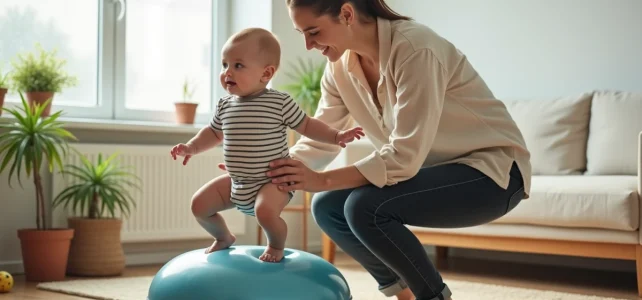
Bouncing a baby on a gym ball is among the activities frequently recommended to encourage first steps. This practice engages several muscle groups simultaneously, and its concrete effects on learning to walk vary depending on the frequency, the baby’s posture, and any potential orthopedic predispositions.
Bouncing on a ball and stabilizing muscles: what recent research measures
A meta-analysis published in the Pediatric Physical Therapy Journal compares muscle activation achieved through different motor methods in infants. Bouncing on a ball shows a qualitative superiority in activating trunk stabilizing muscles compared to play mats or walkers.
| Motor method | Activation of trunk stabilizers | Identified risk |
|---|---|---|
| Bouncing on a ball (assisted) | High | Overuse of the ankles if predisposed |
| Play mat | Moderate | Low |
| Walker | Low (permanently assisted posture) | Falls, documented motor delay |
The walker, whose use is discouraged by most pediatric health authorities, keeps the baby in a posture that limits trunk work. Bouncing on a ball, on the other hand, forces the child to engage their deep abdominal muscles and paravertebral muscles to remain stable.
To explore the practical conditions of this activity, you can read the Allo Papa article that details the gestures to adopt daily.
Frequency and context of bouncing: field observations
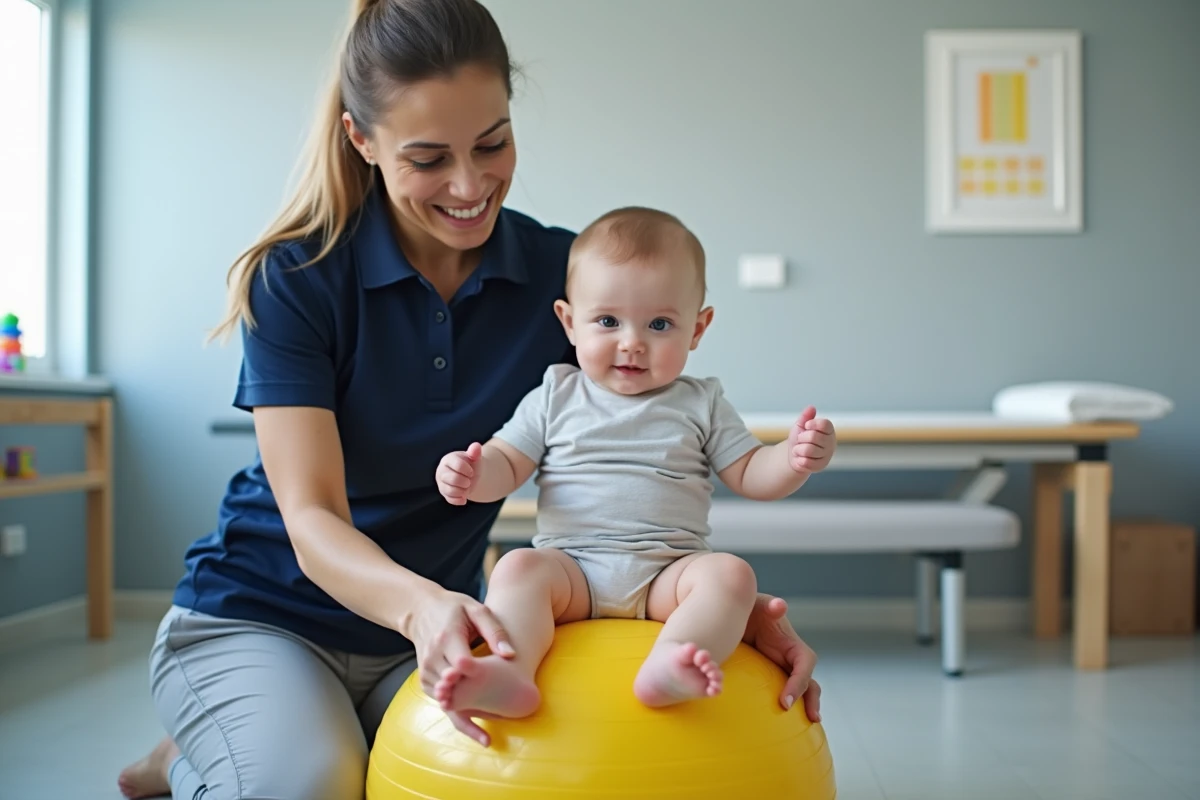
Clinical observations conducted on babies bouncing on a ball about three times a week report a trend towards fewer falls during the learning to walk in this group.
This result remains qualitative. It is not a randomized controlled trial with hundreds of participants, but rather converging clinical observations. The frequency of three weekly sessions seems to constitute a threshold beyond which the benefit on balance becomes noticeable, without specifying the optimal duration of each session.
What bouncing concretely works on
When an adult holds the baby sitting on the ball and applies slight bounces, the child must constantly adjust their pelvic position. This postural adjustment reflex engages the same neuromuscular circuits activated during first steps.
- Trunk stability gradually strengthens, helping the baby stand without lateral support
- Balancing reactions (lateral inclinations, recoveries) refine with each bouncing session
- Proprioception of the feet and ankles is stimulated by contact with the unstable surface of the ball
Giving a ball in each hand to a baby who is starting to move while standing is another complementary approach. By holding objects, the child can no longer use their hands to stabilize themselves and focuses on their balance through the trunk and legs.
Ankles and flat feet: a precaution to take before starting
This activity can also pose problems in certain cases. In a baby with a predisposition to flat feet, repeated bouncing exerts vertical pressure on joints whose ligamentous structures are still immature.
The infant’s arch does not fully form until around the age of five or six. Before this period, the ankles absorb a significant part of the bouncing forces. In a child whose feet collapse more than average, this repeated stress may worsen ankle valgus (inward inclination).
Warning signs to monitor
- The baby refuses to place their feet flat after a bouncing session, preferring to be on tiptoes
- Redness or swelling appears at the level of the internal malleolus (the protruding bone on the inside of the ankle)
- The child shows visible discomfort when standing in the hours following the activity
An early orthopedic examination can identify these predispositions. If a professional identifies a marked flat foot valgus, they will likely recommend free motor exercises on the ground rather than vertical impact activities like bouncing on a ball.
Bouncing on a ball and the overall motor development of the baby
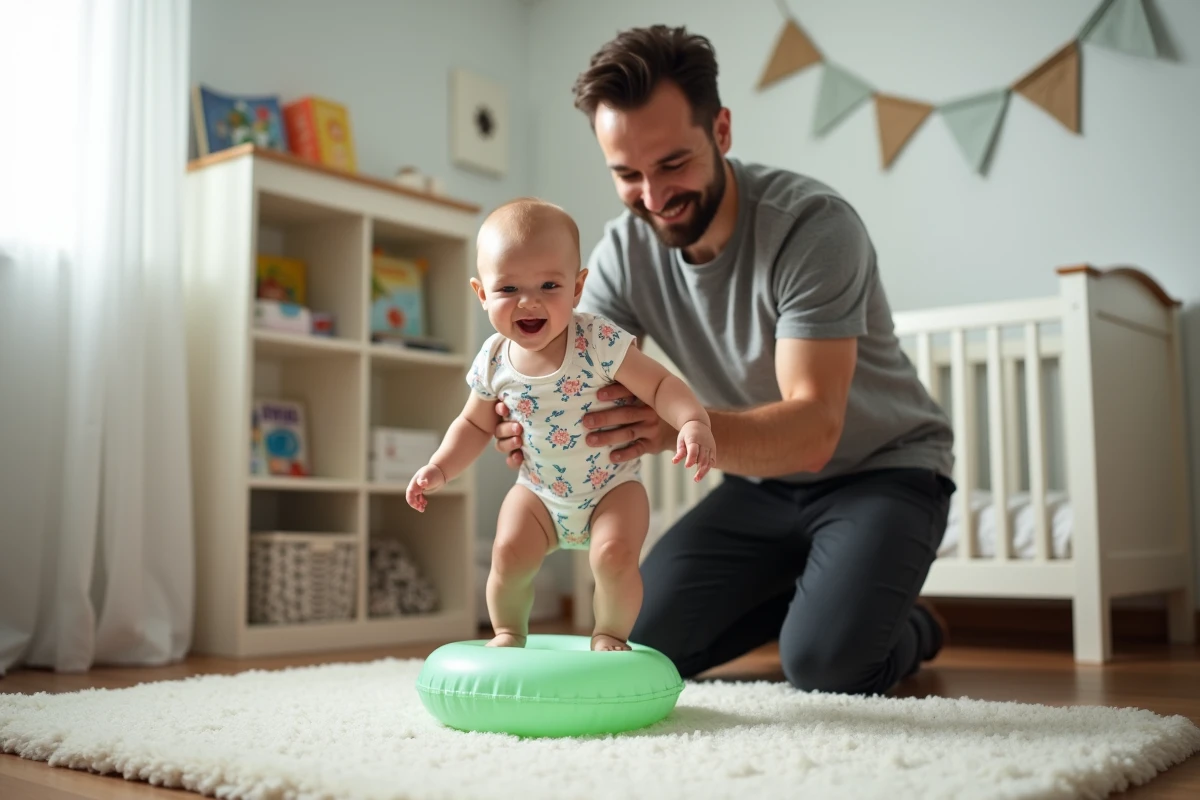
The motor development of a child follows a rhythm unique to each individual. Bouncing on a ball does not shorten the neurological stages necessary (rolling over, sitting, crawling, standing). It strengthens the muscles that will be mobilized when the child is neurologically ready to walk.
This distinction is fundamental. An eight-month-old baby who bounces regularly will not necessarily walk earlier than another. However, the quality of their first steps may be better due to improved postural control.
Bouncing on a ball complements other motor activities (floor play, free exploration, toy manipulation) without replacing them. It serves as one tool among others to support the development of balance.
Parents who wish to offer this activity will benefit from observing their baby’s reaction after each session, particularly regarding the ankles and foot placement. A baby who enjoys it and places their feet naturally flat provides the best indicator that the activity suits them.