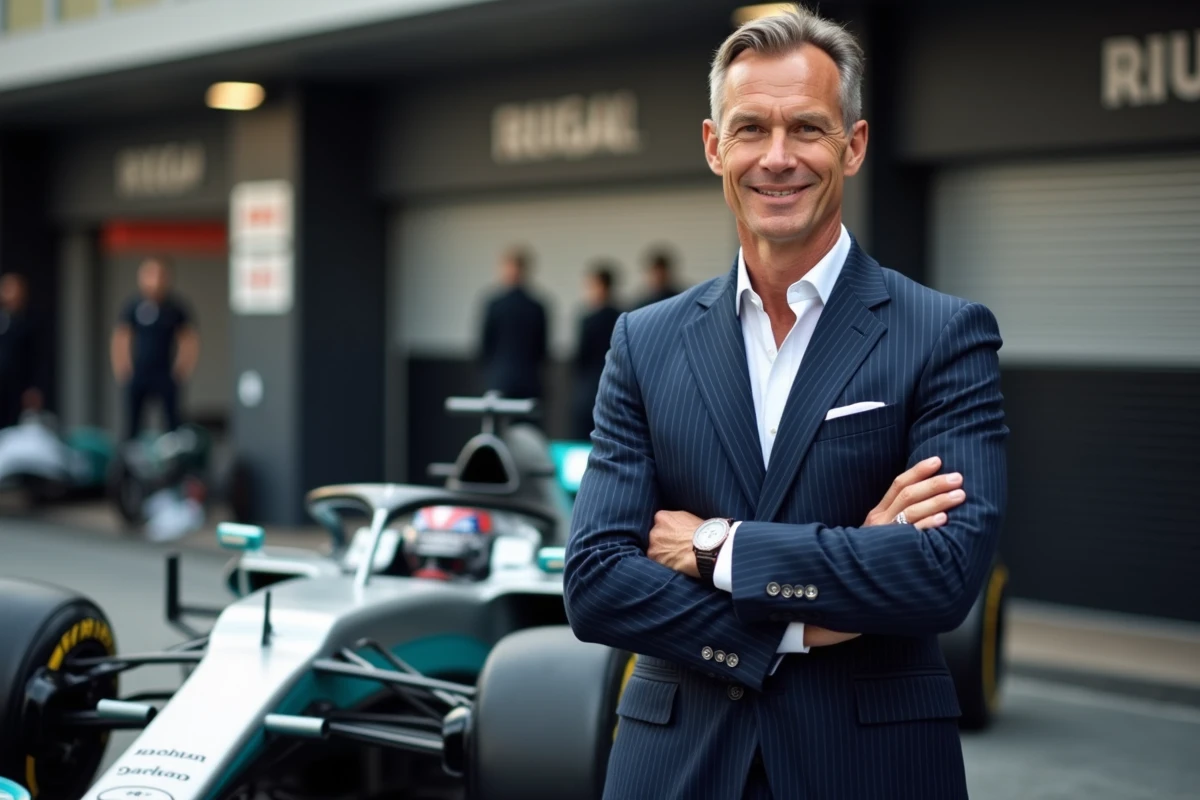
Lewis Hamilton joined Ferrari in 2025 after nearly twenty years in the Formula 1 paddock. His longevity at the highest level, combined with financial choices that far exceed the realm of motorsport, has built a wealth whose magnitude remains difficult to pinpoint accurately. Estimates vary depending on the sources and calculation methods, but several recent publications provide reliable numerical benchmarks.
According to the Sunday Times Rich List 2026, Lewis Hamilton’s fortune reaches 435 million pounds sterling. This British ranking, updated annually, offers a more recent scale than the generic estimates that still circulate in the French-speaking press, often situated around 250 to 300 million dollars.
Cumulative earnings in F1 since 2007: a historic milestone
The annual salary alone is not enough to understand Hamilton’s financial trajectory. According to MoneyWeek, based on data from Sportico, his cumulative career earnings in F1 amount to approximately 880 million dollars since 2007. This figure encompasses salaries, performance bonuses, and contractual bonuses over all his seasons, from McLaren to Mercedes and then Ferrari.
This sum places him among the highest-paid athletes in history, across all disciplines. To understand how much Lewis Hamilton’s fortune is worth, it is necessary to distinguish what he has earned (cumulative gross income) from what he actually owns (estimated net worth), two figures that most articles confuse.

First F1 driver to exceed 100 million dollars in a year
The move to Ferrari in 2025 marked a financial break. Again according to MoneyWeek and Sportico, Hamilton became the first F1 driver to exceed 100 million dollars in earnings in a single year, by combining salary and sponsorship contracts. No driver in the paddock, not even Verstappen with his long-term contract at Red Bull, had crossed this threshold.
This symbolic milestone reflects both the weight of the Ferrari brand (which has the means to offer a massive salary package) and Hamilton’s personal commercial value, whose image transcends the circle of motorsport enthusiasts.
A salary that represents only part of the picture
The salaries of Formula 1 drivers remain opaque. The figures published by Forbes or Sportico rely on cross-estimates, rarely officially confirmed by the teams. Performance bonuses vary greatly from season to season, and confidentiality clauses make any verification impossible.
Investments outside F1: venture capital, real estate, and media
What sets Hamilton apart from most of his rivals is the structuring of his income outside the track. A profile published by Tatler Asia details an asset allocation strategy that goes well beyond typical sponsorship contracts:
- Investments in venture capital funds, focused on various sectors (technology, plant-based food, mobility)
- An international real estate portfolio, with properties spread across several continents
- Equity stakes in media and entertainment projects, extending his media presence beyond F1
This diversification is not trivial. It partly explains why the wealth estimated by the Sunday Times (435 million pounds) far exceeds what sports income alone could justify. Real estate assets, equity stakes in companies, and personal brand income now weigh as much, if not more, than F1 salaries.

Philanthropy and redistribution: a lever for reputation
Hamilton dedicates a significant portion of his income to social causes. His commitments concern programs related to education, diversity in motorsport, and the environment.
This philanthropic dimension also fuels his commercial value. Partner brands seek engaged ambassadors, and Hamilton fits this bill more than any other driver in the paddock. The circle is virtuous: social commitments enhance attractiveness for sponsors, who in turn finance the ability to give more.
Lewis Hamilton’s fortune in 2024: what the numbers don’t say
Any wealth estimate for an athlete of this caliber contains gray areas. Real estate valuations fluctuate, venture capital stakes are only liquid in the event of resale or IPO, and sponsorship revenues depend on sporting results that are never guaranteed.
The available data does not allow for a complete reconstruction of a wealth balance sheet. The Sunday Times and Forbes use different methodologies, which explains the discrepancies between their respective estimates. The figure of 435 million pounds from the Rich List 2026 likely includes illiquid assets that other rankings exclude.
- Cumulative career earnings (approximately 880 million dollars) do not correspond to net worth
- Venture capital investments can lose all value as easily as they can multiply
- Sponsorship contracts are regularly renegotiated, sometimes downwards after a poor season
Hamilton remains, at this stage, the richest active Formula 1 driver. His transfer to Ferrari and the milestone of 100 million dollars annually in 2025 have solidified this position.
The question is no longer really whether he is the highest-paid driver, but rather how to measure the gap between what F1 brings him and what his parallel activities generate. This second aspect, less visible, could weigh more heavily than the first in the coming years.