Nestled in the heart of the Caribbean, Jamaica is much more than a paradise beach destination. This island jewel, rich in history and culture, offers a fascinating journey through time and landscapes. From the lush mountains of the Blue Mountains to the fine sandy beaches of Negril, every corner of the island tells a unique story.
Jamaica, the birthplace of reggae and the land of the iconic Bob Marley, possesses a strong cultural identity, forged by centuries of colonization, resistance, and resilience. This land, where African, European, and indigenous influences blend, invites a deep exploration of its past and its vibrant traditions.
History of Jamaica
Before the arrival of Europeans, Jamaica was inhabited by the Arawaks and the Tainos. These indigenous peoples lived in harmony with their environment, practicing agriculture and fishing. In 1494, Christopher Columbus discovered the island, marking the beginning of the colonial era. The island came under Spanish rule before being conquered by England in 1655.
During the colonial period, Jamaica became a major center of the slave trade. Sugar plantations, fueled by enslaved labor, thrived. The resistance of the slaves, symbolized by the Maroons, led to several revolts, laying the foundations for a resilient and combative Jamaican identity.
Independence and Modernity
In 1962, Jamaica gained independence, freeing itself from British colonial rule. August 6, 1962 marks this emancipation, with Andrew Holness as Prime Minister and Patrick Allen as Governor-General. Jamaica remains a member of the Commonwealth, recognizing Charles III as king.
The capital of Jamaica, Kingston, quickly became a cultural and economic center. The reggae, born on this island, found its ambassador in Bob Marley, whose music and message continue to inspire the world. Independence also gave rise to social and political movements such as the Rastafari movement, advocating for peace and social justice.
Heritage and Continuity
Today, Jamaica asserts itself as a country rich in its past and looking to the future. The influences of the Arawaks, Tainos, European colonists, and African slaves blend to form a unique culture. The island continues to develop, proud of its heritage and determined to write new chapters of its history.
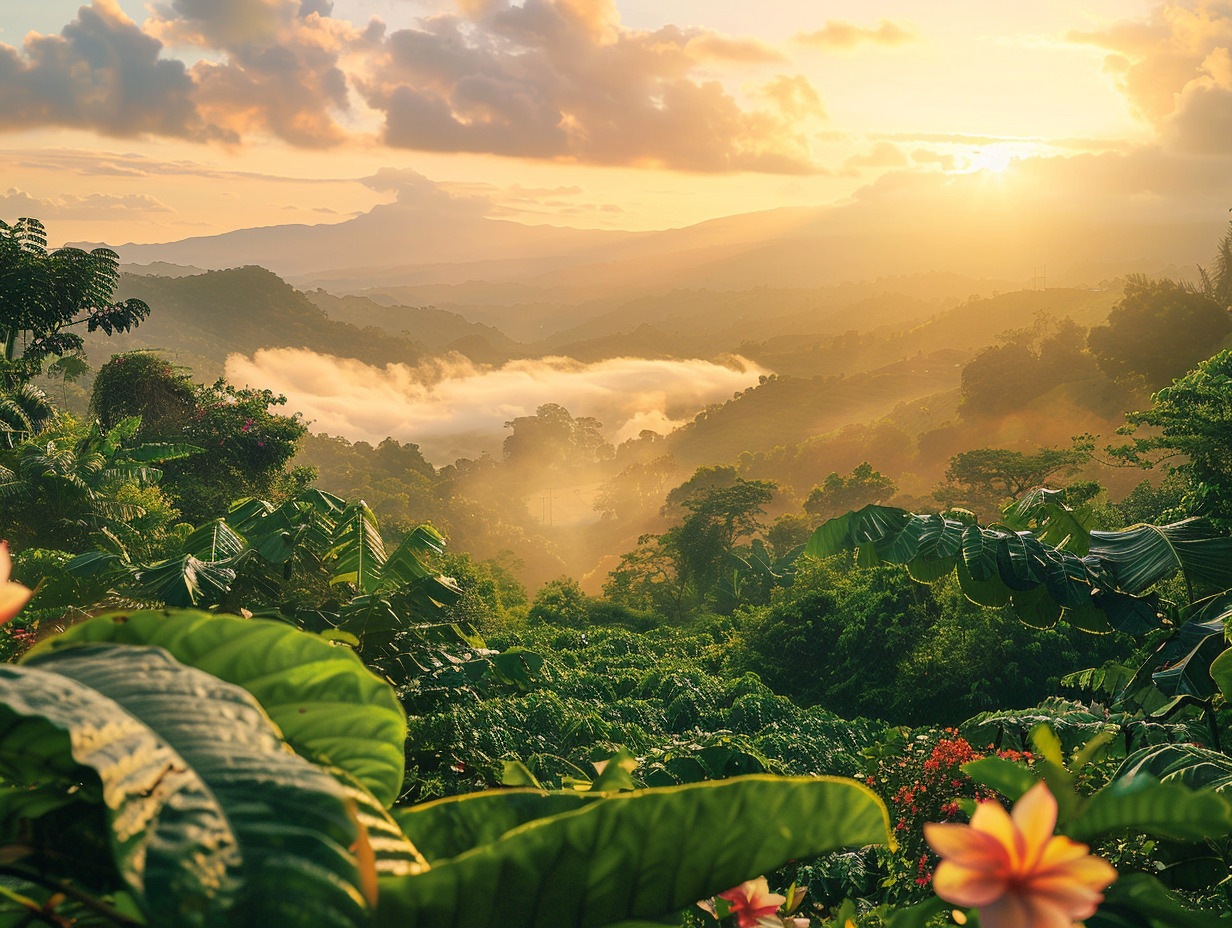
Geography and Environment of Jamaica
Jamaica, located in the Caribbean, is the third largest island in the region. It stretches about 240 kilometers long and 80 kilometers wide. This territory is characterized by impressive geographical diversity:
- The Blue Mountains, peaking at 2,256 meters with Blue Mountain Peak, offer spectacular landscapes and host remarkable biodiversity.
- The coastal plain surrounds the island with its fine sandy beaches, notably in Montego Bay and Ocho Rios, popular tourist destinations.
- The tropical forests and mangroves contribute to the island’s rich and varied ecosystem.
Main Cities
The capital, Kingston, is the economic and cultural heart of Jamaica. It houses major institutions like the University of the West Indies and the Bob Marley Museum. Montego Bay, on the other hand, is famous for its resorts and cruise port.
Environment and Challenges
Jamaica faces environmental challenges such as deforestation and soil erosion. Conservation initiatives aim to protect fragile ecosystems, including wetlands and coral reefs.
The national motto, ‘Out of Many, One People’, reflects the cultural and ethnic diversity of the island. The coat of arms of Jamaica and the flag are symbols of this unique heritage.