
A silent question hangs in the air: when did technology stop waiting for an invitation to settle, unceremoniously, at the heart of our lives? One morning in 2017, a virtual assistant intervened right in the middle of a family discussion, delivering without a blink the identity card of the household cat. Since that moment, nothing has slowed down the great march of tech. From plush living rooms to high-tech offices, it has invaded everything, never asking for permission.
Who would have bet a euro on the explosion of NFTs or the boom of AI-powered meditation apps? Initially mocked, then scrutinized, these trends ultimately swept away certainties, disrupting everything in their path: security, leisure, creativity. Priorities have been rewritten on the fly.
With each innovation, it’s the same cocktail: a dose of boldness, a zest of skepticism, sometimes a pinch of chaos skillfully measured. And always that taste of the unexpected, that scent of revolution that doesn’t name itself.
What the past years have truly taught us about tech
Impossible to pretend: in recent years, the tech market has revealed itself without filter. Behind the flashy promises lies fierce competition to seize the competitive advantage and lock down the control of information. The analysis of emerging trends doesn’t lie: artificial intelligence and big data have turned the tables, altering even the smallest gears of decision-making, anticipating, and reacting.
The crux of the matter? Transforming masses of data into usable insights, sensing weak signals, predicting market tremors through predictive analysis. Now, value is no longer tied to size or seniority: it’s the speed of adaptation that wins the day. The Consumer Electronics Show is no longer just a showcase: it stages the global struggle for continuous innovation, without pause or respite.
- Emerging technologies – generative AI, machine learning, data intelligence – are advancing rapidly. But their integration requires constant vigilance: who controls the data? For what purposes?
- The proliferation of solutions forces strategic choices, integrating without losing control or sacrificing principles.
The landscape of digital usage is also illustrated in the battle of infrastructures: the three major operating systems in June 2019 tell a story of shifting hierarchy, driven by three engines: openness, security, capacity to innovate. These choices are never neutral: they betray the tension between the quest for efficiency and the desire to maintain control over tools.
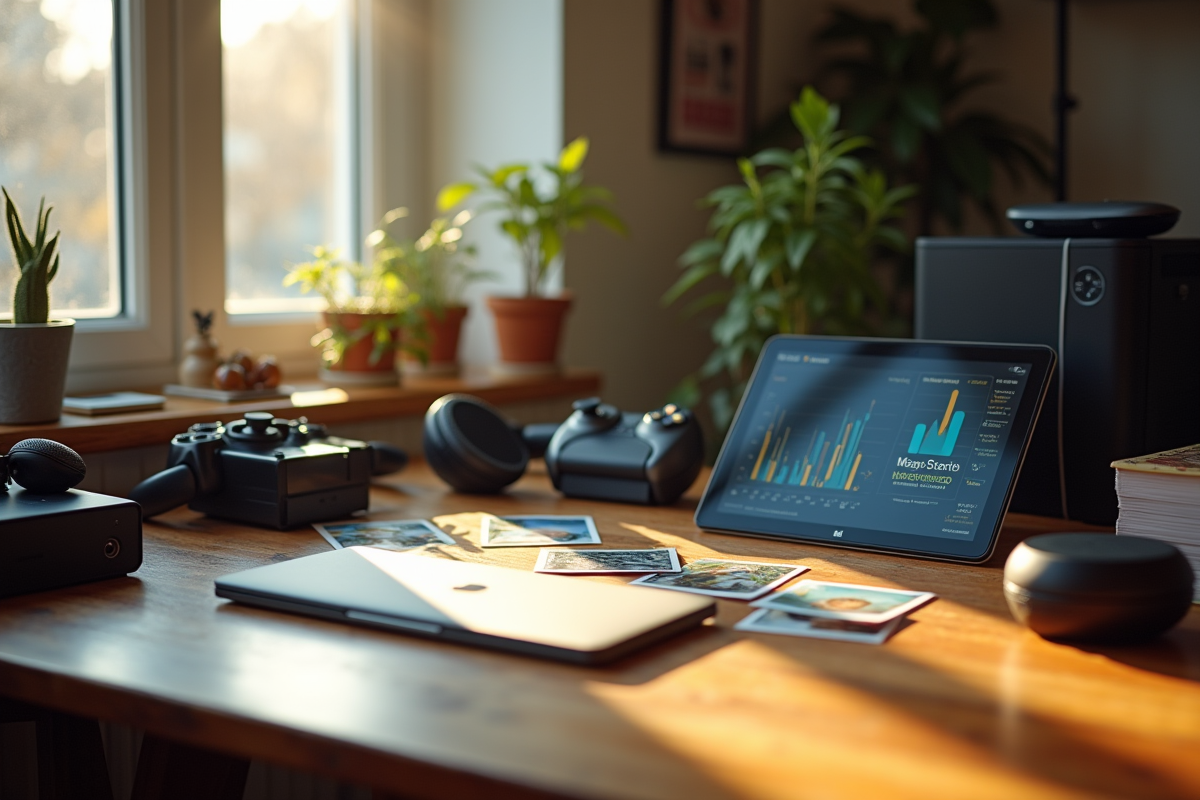
What innovations have lasting impacts on our daily lives?
The last decade has not only seen gadgets come and go: it has anchored innovations that have rewritten the rules, both at home and at work. The Internet of Things (IoT) offers the best illustration:
- Smart thermostats, connected watches, sensors in factories – these continuously connected devices generate and dissect data every second, revolutionizing energy management and logistics.
Social media have imposed their codes, creating a new way to inform and connect. Information circulates, reinvents itself, personalizes. Everyone becomes, in turn, a creator, broadcaster, analyst. Companies, on the other hand, have had no choice: their relationship with customers must now adjust according to location and digital behaviors.
Video has taken the lion’s share, both in the office and in living rooms. Remote meetings, streaming platforms, tutorials, or webinars have shaped an ultra-connected society, where image takes precedence over text and mobility becomes the norm.
- Augmented reality and virtual reality are changing the way we learn, consume, and entertain ourselves. A total immersion, unprecedented experiences in training, commerce, or leisure.
- Interactive dashboards are establishing themselves as management compasses: they offer unparalleled visibility on flows, indicators, and decisions to be made.
Artificial intelligence has entered team management, production optimization, and a fine understanding of needs. In finance as well as in internal organization, these tools have reconfigured practices, often faster than some had imagined.
And tomorrow? Hard to predict the next wave. But one thing is certain: technology will not wait for us to open the door. It will push it, or come in through the window.