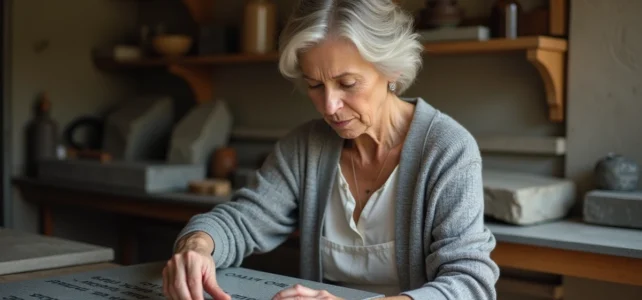
When faced with the catalog of a stonemason or an online shop, the number of shapes, materials, and engraving options can be overwhelming. The personalized memorial plaque must fit on a gravestone, withstand the elements, and, above all, evoke the personality of the deceased for years to come. Starting from concrete constraints allows for a more serene choice than flipping through hundreds of unfiltered models.
Material Resistance: What Really Lasts on a Grave
Granite is often the reflex choice, and it’s a solid option. Natural stone withstands frost, acid rain, and UV rays without flinching for decades. Black granite remains the most readable for clear engravings, while gray or pink shades better match certain monuments.
In recent years, glazed ceramic and tempered glass have been gaining ground. Several European manufacturers offer plaques guaranteed against fading for about twenty years, thanks to outdoor inks treated to be UV-resistant. These materials allow for the integration of color photos that do not turn yellow after a few winters, unlike low-cost plexiglass prints.
Plexiglass (or Altuglas) and acrylic remain common for tight budgets. Their initial appearance is sharp, but feedback varies on this point: some finishes dull within two or three years, especially if the grave is exposed to full sun. If opting for plexiglass, it’s best to check that the UV treatment is explicitly mentioned by the manufacturer.
For those looking for a memorial plaque that reflects a loved one with lasting fidelity, you can consult the selection on Klottra which details suitable photo and material options.
Memorial Plaque with Photo: Choosing the Right Shot and Support
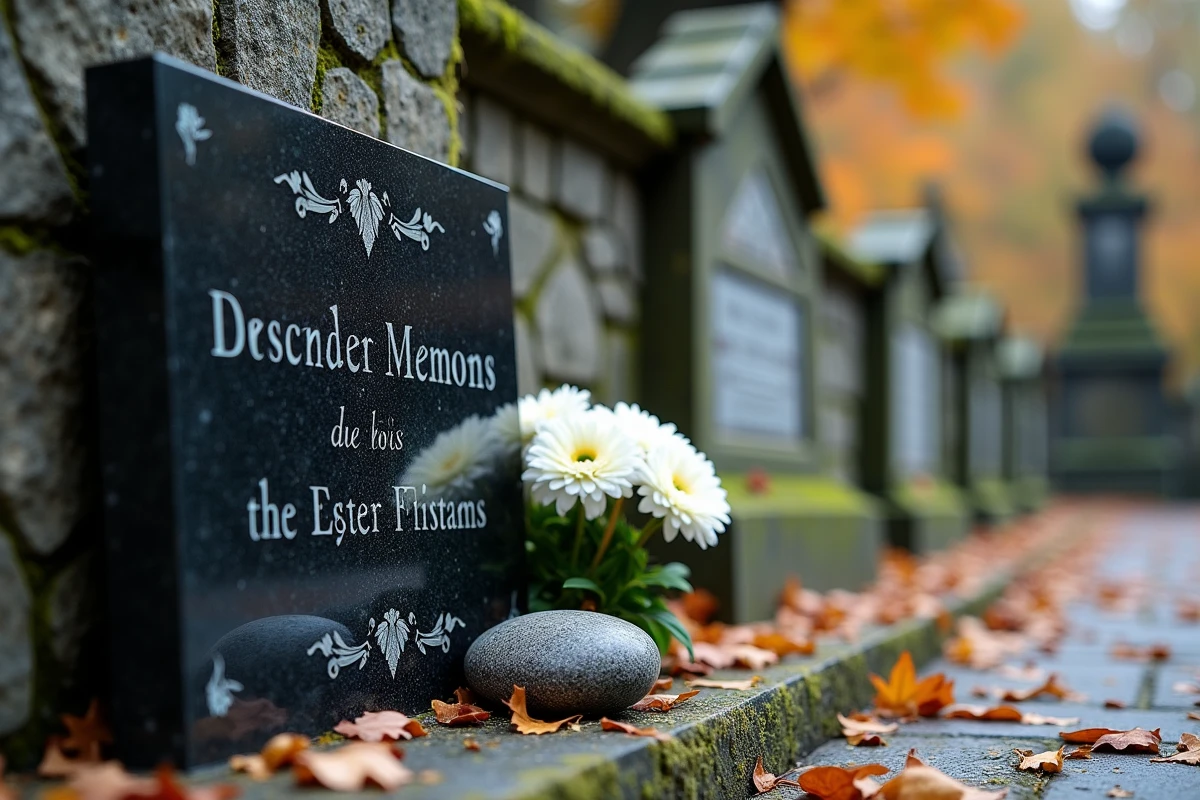
Incorporating a photo of the deceased on the plaque is the most direct form of personalization. The result depends as much on the original shot as on the printing process.
Technical Criteria for the Photo
- The resolution of the file must be sufficient for a sharp print over a few centimeters. A cropped portrait from a group photo risks pixelation, especially in ceramic printing.
- A shot with natural lighting, without direct flash, provides a more faithful rendering once transposed onto stone or glass. Overly busy backgrounds complicate the cropping.
- The choice of moment in life matters: a portrait that reflects the character of the deceased (smile, posture, activity) speaks more than a frozen ID photo.
Medallion or Full Plaque Print
The memorial medallion, oval or round in shape, is screwed onto the gravestone or onto a granite plaque. It is the classic, discreet format that integrates into almost all monuments. Glazed ceramic is the reference support for medallions: high-temperature firing fixes the image in the glaze.
The full plaque print, on the other hand, covers the entire surface with a photo, landscape, or montage. This format is suitable when one wants to represent a universe (mountain, sea, garden) rather than a simple portrait. Tempered glass and certain mineral composites offer the best color rendering here.
Engraving and Text on Memorial Plaque: What Can Really Be Written
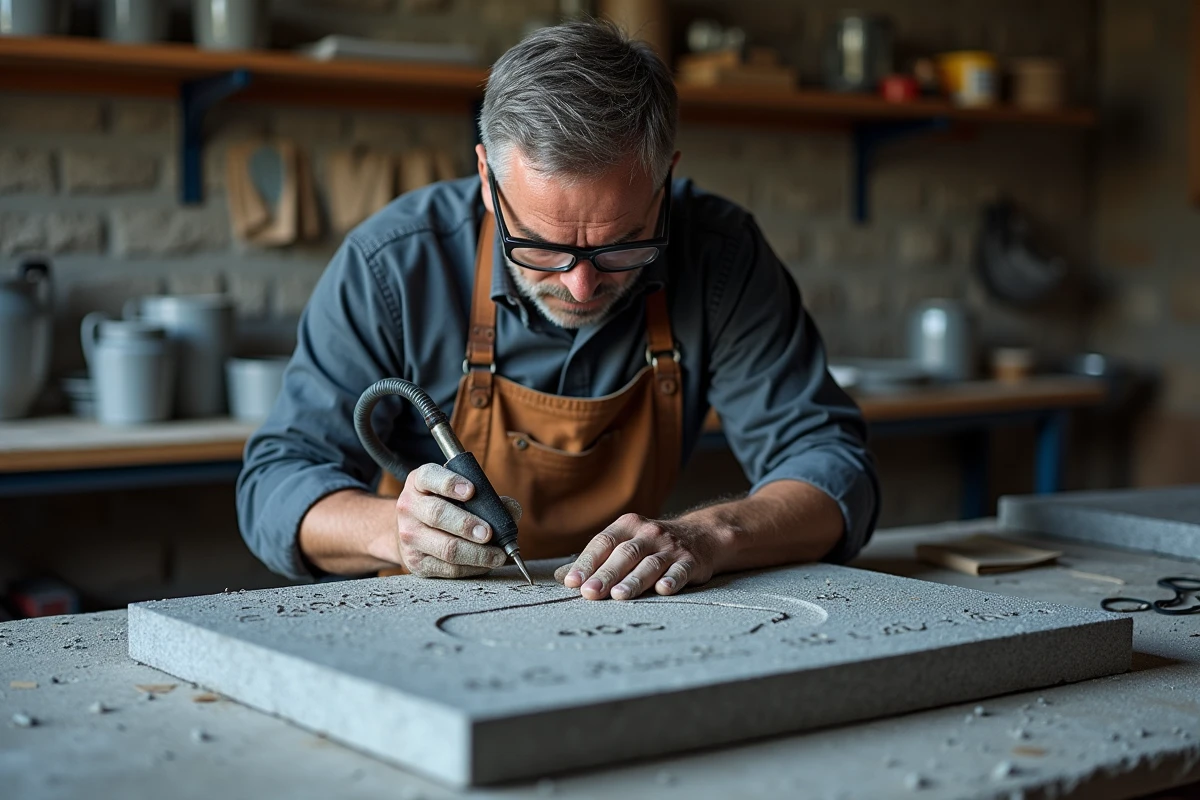
Engraving remains the most durable option for text. On granite, the carved letters gilded with gold leaf last for decades. On plexiglass, laser engraving is precise but less deep.
In terms of content, there are generally a few lines available. A first name, dates, a short quote, or a personal word are sufficient. Overly long phrases are hard to read on a standard-sized plaque (between ten and fifty centimeters).
- Prefer a phrase that the deceased often said rather than a generic quote found online. The tribute gains authenticity.
- Check the readability of the font from a distance: a plaque is read standing, not with one’s nose up close. Characters that are too thin or too ornate pose problems.
- On plaques with photos, place the text at the bottom or on a side banner to avoid encroaching on the face.
Eco-Friendly Memorial Plaque: Emerging Alternatives
The work of ADEME on the ecological footprint of the funeral sector and reports from the Foundation Services Funéraires de France have highlighted the most polluting materials, notably certain imported granites and synthetic resins. In response, manufacturers are offering plaques made from sustainably treated wood or local stone, sometimes accompanied by FSC or PEFC certifications.
This market remains niche, but demand is growing. At trade shows like Funexpo, stands dedicated to recycled or bio-sourced materials are multiplying. For a tribute consistent with the ecological values of the deceased, these options deserve to be explored with stonemasons committed to this approach.
Shape and Dimensions: Adapting the Plaque to the Existing Monument
A heart-shaped, open book, or free-form plaque catches the eye, but it must also integrate with the monument. On an old gray marble gravestone, a simple rectangular plaque in black granite will be more harmonious than a pink plexiglass heart.
Before choosing the shape, measure the available space on the gravestone. Some concessions impose dimensional constraints set by cemetery regulations. A quick call to the town hall or the cemetery manager can avoid unpleasant surprises at installation.
Personalizing a memorial plaque is not just about ticking options in a configurator. The material determines durability, the chosen photo sets the tone, and the text engraves a final word. Taking the time to check the support’s resistance and compatibility with the monument remains the best way to achieve a tribute that lasts over time, in the literal sense.