
Manure applied to a lawn does not behave the same way as it does on bare garden soil. The dynamics of mineralization, the C/N ratio of the litter, and the risk of leaf burn change radically as soon as a living turf covers the soil. We will detail the technical points that most general public guides overlook, from the nitrogen-ammoniacal ratio to local regulatory constraints.
C/N Ratio and Mineralization of Manure on Living Grass
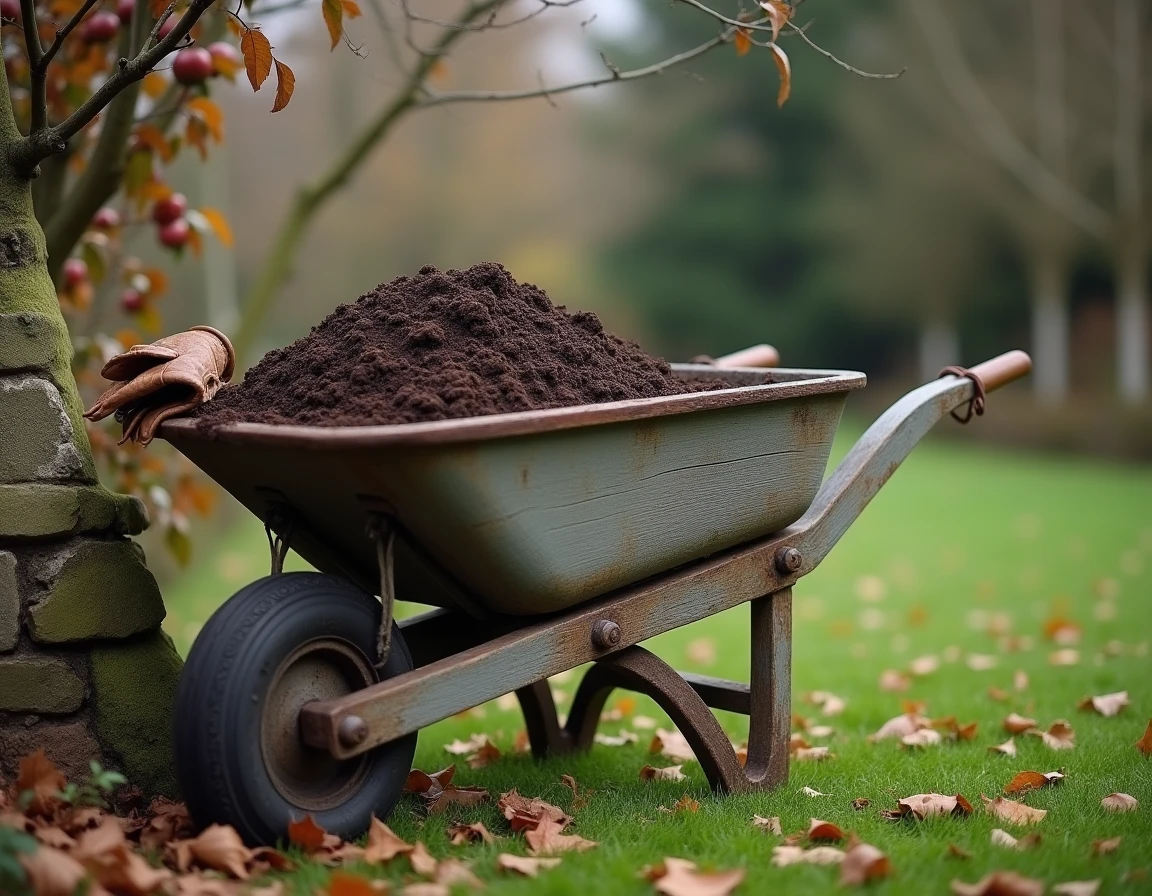
Fresh horse manure typically has a C/N ratio often exceeding 25, sometimes close to 30 when the litter contains wood chips. Spread on the surface of a lawn, this manure mobilizes nitrogen from the soil for its own decomposition. The grass, a heavy nitrogen consumer, then competes directly with the decomposing microorganisms.
The visible result: yellowing of the grass in the weeks following application, often mistakenly interpreted as chemical burn. We recommend never applying fresh manure to grass that is in active growth. The mineralization is too slow, blocking the assimilable nitrogen instead of releasing it.
Composted manure (with a C/N ratio reduced to around 15) bypasses this problem. The stabilized organic matter releases its nutrients gradually without nitrogen hunger. Knowing when to apply manure to the lawn thus first involves assessing the decomposition stage of the product, not just the season.
Composted Manure or Fresh Manure on Lawn: Technical Choice Criteria
The distinction between fresh and composted manure is not just a matter of smell. Three technical parameters separate the two products when intended for a lawn.
- Ammoniacal nitrogen content: fresh manure contains more, leading to surface ammonia emissions, especially in warm weather. Research from INRAE confirms that these emissions increase significantly on soil already saturated with nitrogen or during applications in late spring.
- Weed seed load: poorly composted manure, where the fermentation temperature has not exceeded the lethal threshold for seeds, introduces weeds directly into the lawn. Composting conducted at sufficient temperature for several weeks eliminates most viable seeds.
- Pathogen risk: phytosanitary and parasitic agents (nematodes, fungi) are destroyed by complete composting. On a lawn trampled by children or animals, this parameter is not trivial.
In summary, only manure that has undergone complete composting is suitable for surface application on grass. Fresh manure remains useful, but only buried in bare soil before sowing or overseeding.
Manure Application on Lawn in Autumn or Spring: Technical Schedule
Autumn remains the most consistent window for applying composted manure to grass. The soil is still biologically active, leaf growth slows down, and rains facilitate the natural incorporation of organic matter into the top few centimeters.
An autumn application allows several months for microorganisms to break down the residual matter before spring growth resumes. The lawn then benefits from a restructured soil at the moment its nutrient demand restarts.
Spring Case
A spring application is not excluded, but it imposes constraints. The composted manure must be very mature (earthy appearance, absence of strong odor) and applied in a thin layer. A thickness greater than one centimeter risks suffocating the grass blades by blocking light and air circulation at the base of the tufts.
We systematically avoid applications between May and August. The heat accelerates the volatilization of ammonia, odors become bothersome for neighbors, and the grass stressed by heat tolerates any surface disturbance poorly.
Optimal Window
In practice, the most favorable period is between late September and mid-November, after the last close mowing of the season. A second window exists in March, just before the resumption of vegetation, provided the soil is not waterlogged.
Regulatory Constraints on Manure Application in Residential Areas
This point is rarely addressed in gardening articles. Since 2020, several municipal orders and local urban planning regulations in France impose minimum distances and prohibition periods for manure application, even for private individuals.
The runoff of nitrogen and phosphorus into a drainage network or ditch constitutes the main regulatory reason. A sloped lawn amplifies this risk: rainwater carries soluble elements from the manure well before the soil can absorb them.
Before any application, we recommend checking three points:
- The distance from the nearest water point (ditch, stream, storm drain). Some municipalities set a minimum setback.
- The local prohibition calendar. Frost or heavy rain periods may trigger a temporary ban.
- Neighborhood rules. The smell of manure, even composted, can lead to complaints. An application followed by light watering significantly reduces odor nuisances.
Dosage and Application Method on Established Lawn
On an already established lawn, composted manure is applied as top-dressing, meaning in a thin surface layer. The goal is to nourish the root mat without covering the leaves.
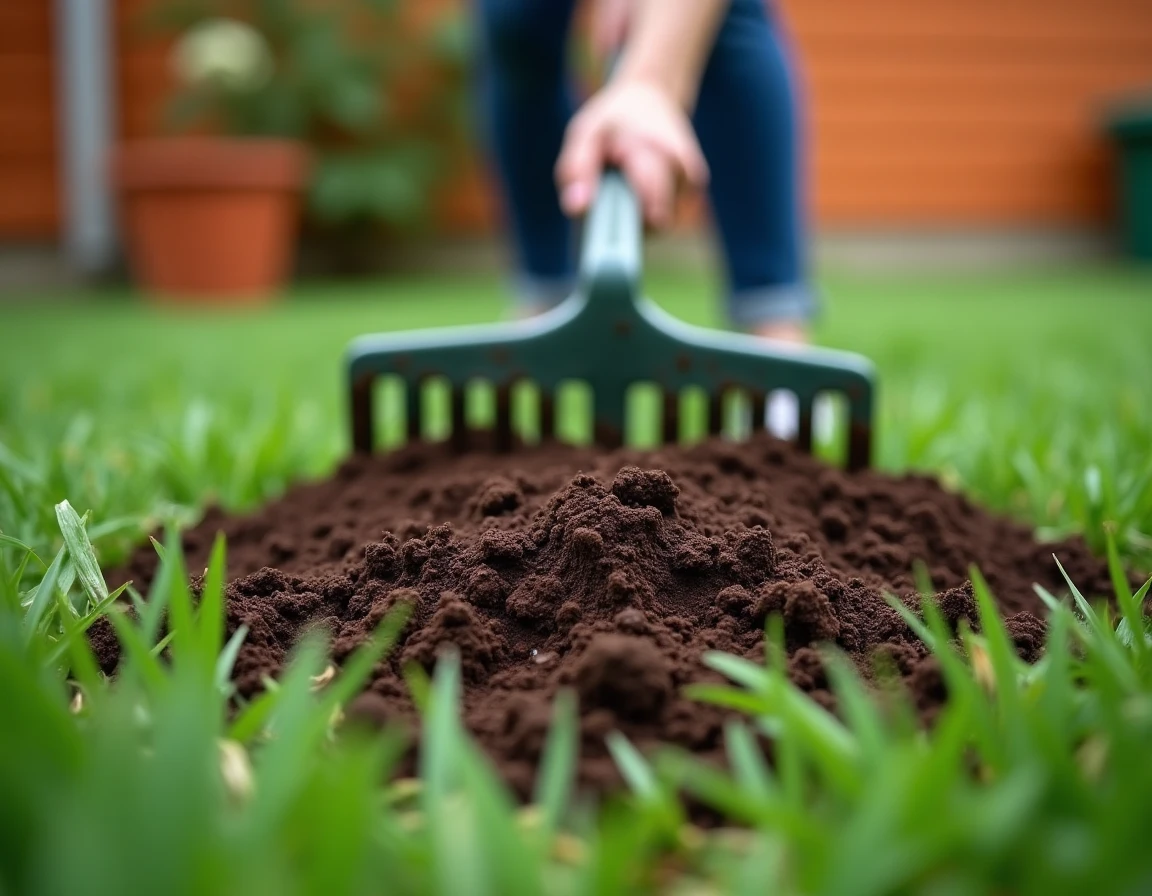
The manure should be screened or finely crumbled. Compact clumps create shaded areas that cause the grass to yellow due to light deficiency. Raking after application helps to work the particles down between the blades.
Mechanical aeration of the soil before application multiplies the effectiveness of the input. The holes created by a blade or core aerator provide direct access for organic matter to the root system. Without this step, a significant portion of the manure remains on the surface and dries out.
In overseeding areas (bare soil visible), a slightly more generous application is acceptable. Composted manure then serves both as an amendment and a germination medium for the new seeds.
A lawn fertilized with composted manure once or twice a year, in autumn and possibly at the end of winter, maintains a superior density and color compared to a lawn nourished solely with mineral fertilizers. The organic matter improves soil water retention, reducing summer watering needs and limiting surface thatch.